
Dead volume in microdisepnsing – liquid effects and best practises
Learn how liquid properties influence dead volume in microdispensing and how to reduce loss, improve accuracy, and prevent carry-over.

Learn how liquid properties influence dead volume in microdispensing and how to reduce loss, improve accuracy, and prevent carry-over.
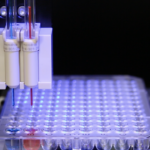
DEAD VOLUME IN MICRODISPENSING – OVERVIEW AND MEASUREMENT Part 1 What is Dead Volume and its impact on microdispensing? In the context of a dispensing pipette, dead volume refers to the amount of liquid that remains trapped inside the capillary of a pipette/ nozzle. This amount cannot be removed during the dispensing procedure.…
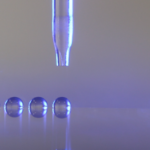
Today’s piezo microdispensers are very flexible, they cover a volume range from about 20 picoliters up to low microliters, with operating frequencies of up to 2,000 droplets per second.
CONTACT vs. NON-CONTACT MICRODISPENSING A Practical Overview for Modern Bioassay and Microarray Production In the previous article, we tried to explain what microdispensing is and that there are other features equal to, or even more important than, the droplet’s size and volume. In this article, we will explain the general…
The dispensing of ultra-low volumes is important for labs and companies developing microarrays, biosensors, diagnostic assays, or lab-on-a-chip systems.
