


Detection of glioma-derived exosomes using a biotinylated antibody-functionalized titanium nitride plasmonic biosensor demonstrates high sensitivity and specificity.
Malignant gliomas are one of the most dangerous brain tumors. They grow fast and it is also not easy to detect them in time. Despite hiding behind the hematoencephalic (blood–brain) barrier, they can be detected by plasmonic biosensor. Thanks to the fact, that gliomas develop exosomes – small vesicles carrying tumor fingerprints. The vesicules can slip through the hematoencephalic barrier into blood or other body fluids (saliva, urine).
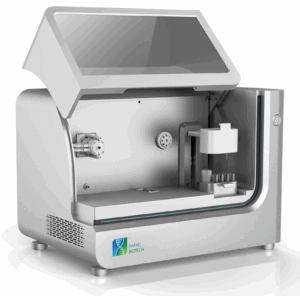
The Titanium Nitride (TiN) plasmonic biosensor allows the detection of the exosomes. Titanium nitride (TiN), is an excellent alternative plasmonic supporting material. In contrast to traditional gold and other metals, TiN exhibits tunable plasmonic properties in the visible and near-infrared spectra. TiN shows excellent mechanical and chemical stability. This property makes the QPLoC biosensor suitable for biosensing applications with its biocompatibility, high stability, and label-free sensing power. TiN biosensor has great potential to detect cancer biomarkers – quickly, sensitively, and without invasive procedures.
In this article,
the researchers synthesized a thin TiN coating using magnetron sputtering to improve crystallinity and plasmonic properties. They found out that the optimal thickness for sensing performance was around 30 nm.
The team imobilized the biotinylated antibody anti-CD63 onto the TiN biosensor’s surface to improve the biosensor’s sensitivity. The improved TiN-based biosensor caught exosomes in amounts ranging from 0.005 micrograms per milliliter up to 500 micrograms per milliliter. The limit of detection was extremely sensitive. The smallest amount it could reliably detect was 0.00429 micrograms/mL for CD63 (cca 40 kDa) and 0.00275 micrograms/mL for EGFRvIII (mutated epidermal growth factor receptor on exosomes, cca 160 kDa).
In comparison with conventional sensors, the TiN biosensor showed 106% better sensitivity. As well as a faster functionalization process, which took 37 minutes compared to almost 108 minutes for the traditional gold sensors. The TiN biosensor is a highly sensitive tool for quantifying glioma-derived exosomes and their associated proteins. It is fully applicable for real biological fluids, which was proven by detecting exosomes from mouse serum, outperforming traditional SPR gold-film biosensors in sensitivity and functionalization efficiency, indicating its potential for clinical applications in liquid biopsy.