


Application:
Traditional qRT-PCR remains the benchmark for SARS-CoV-2 detection, yet it faces limitations including susceptibility to mutations, amplification errors, and restricted multiplexing capacity, which are usually time-consuming and not fitting for clinical applications. To address these challenges, there has been developed a Quantum Plasmonic Lab-on-Chip (QPLoC) biosensor in combination with CRISPR-Cas13 technology. In general, the TiN plasmonic biosensor QPLoC demonstrated better sensitivity and linearity than qRT-PCR kits at detection of novel coronaviruses.
The QPLoC platform uses thermoplasmonic heating and quantum optical measurements to enable label-free, multiplexed detection of over 100 viral genome fragments in parallel. This approach delivers results within 15 minutes with attomole-level sensitivity (500 copies/mL). Using a cost-efficient biochip made of titanium nitride nanocubes via 3D printing. The biosensor provides a robust and scalable alternative to gold-based chips.
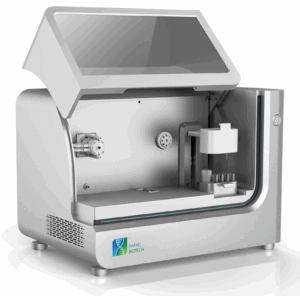
Compared to commercial qRT-PCR kits, the QPLoC biosensor shows better sensitivity and linearity at low viral concentrations, highlighting its potential for rapid and reliable results in molecular diagnostics.
.